MINIMAL COLLECTION
"A collection inspired by the rhythm of a radio"
Material dialogue and modularity in rattan
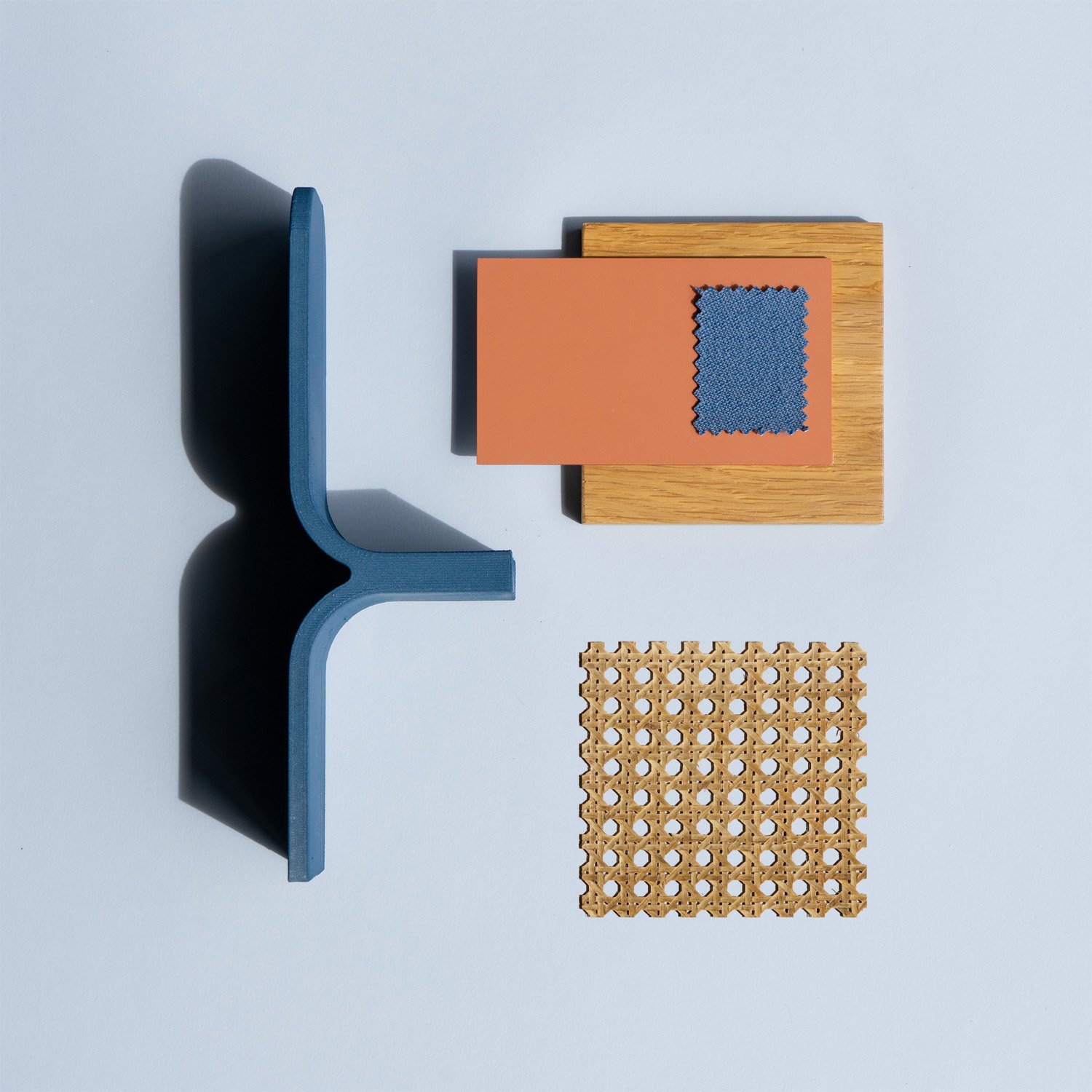
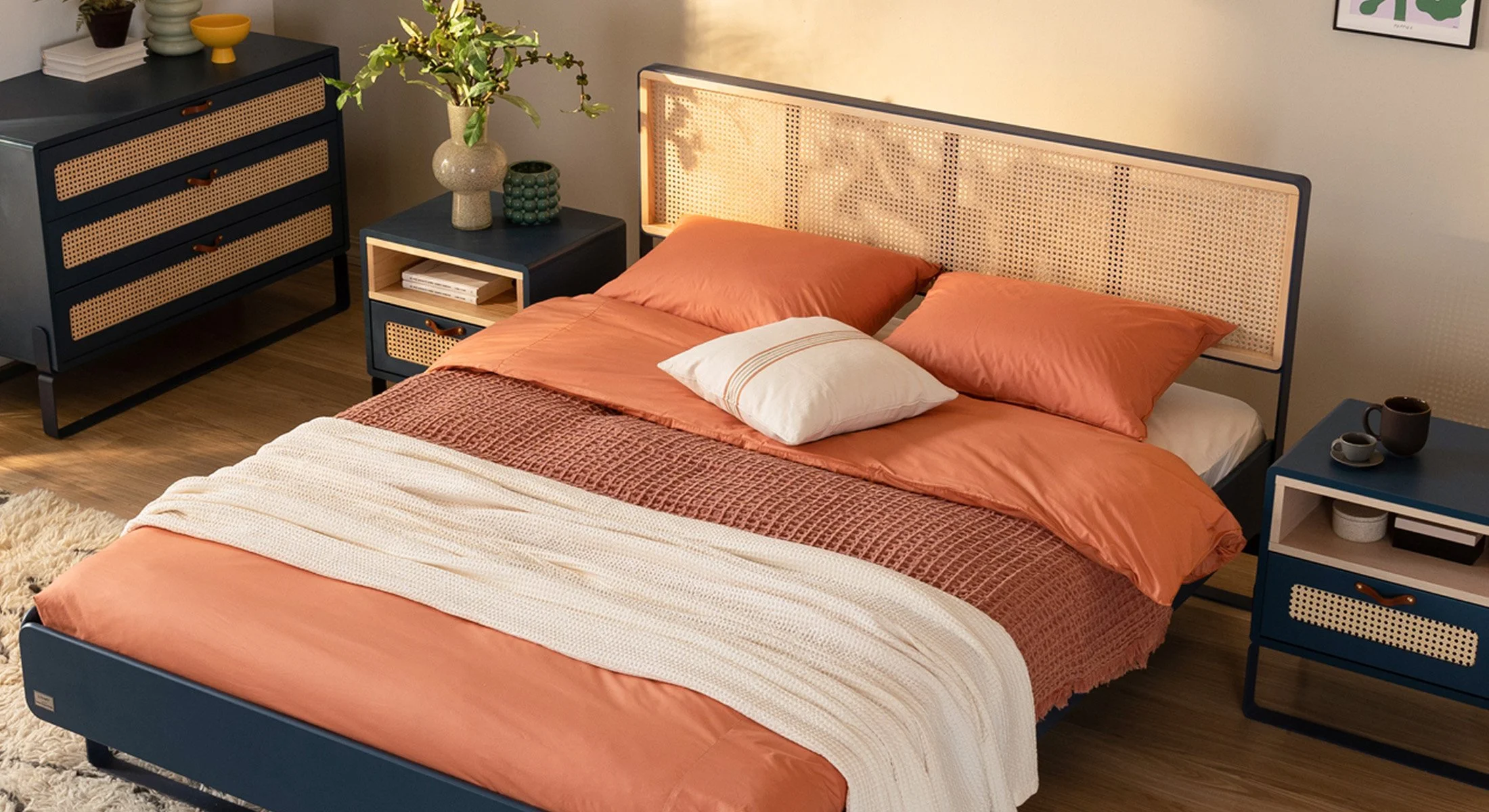
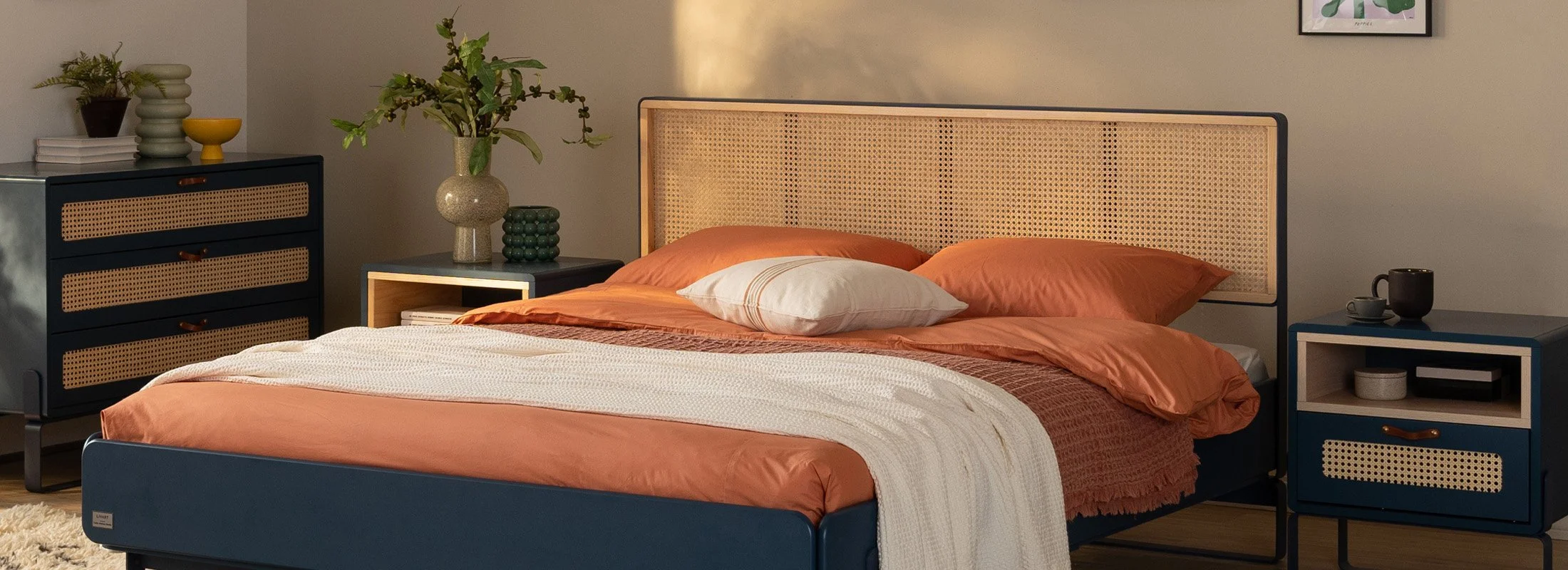
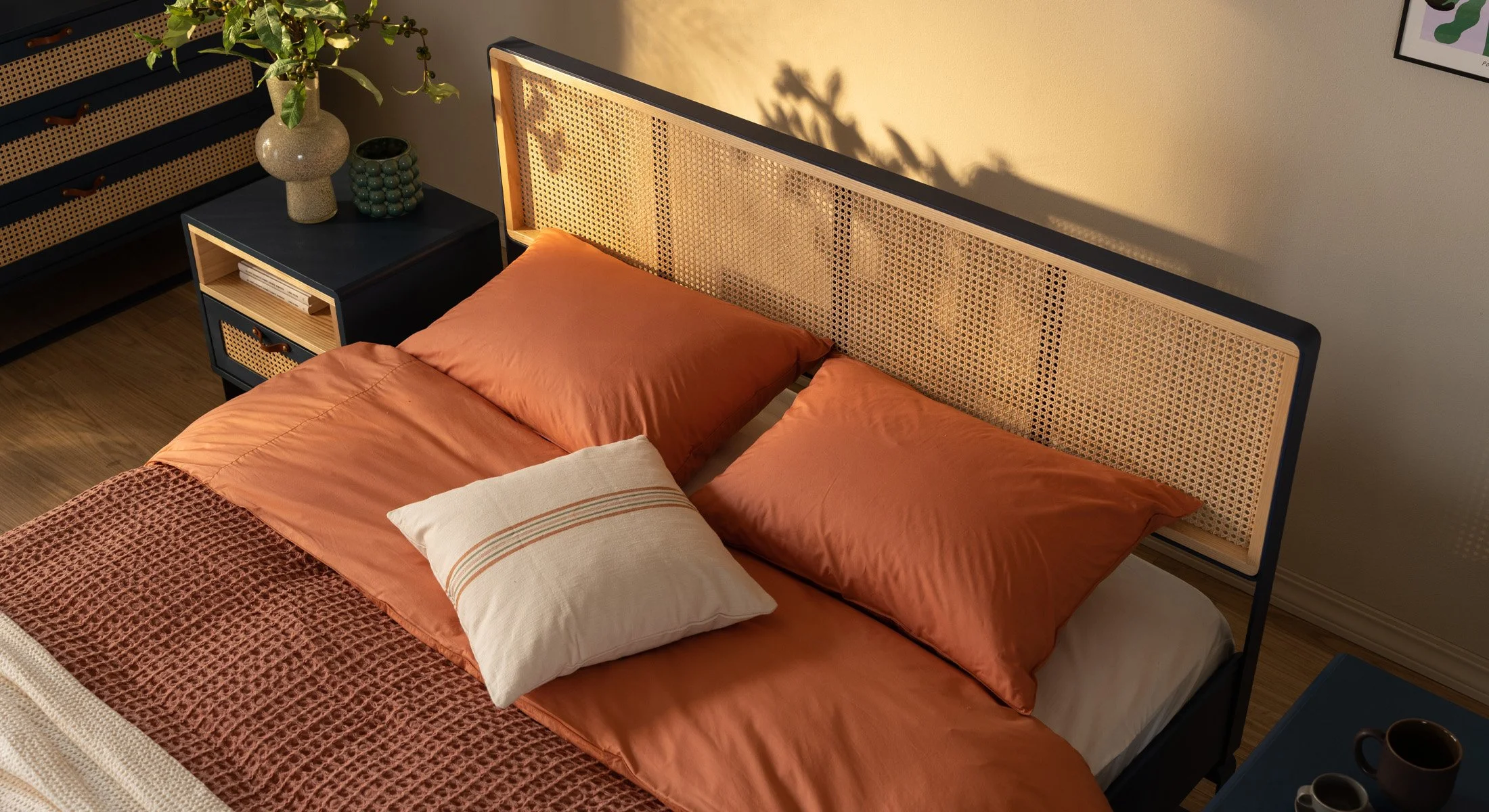
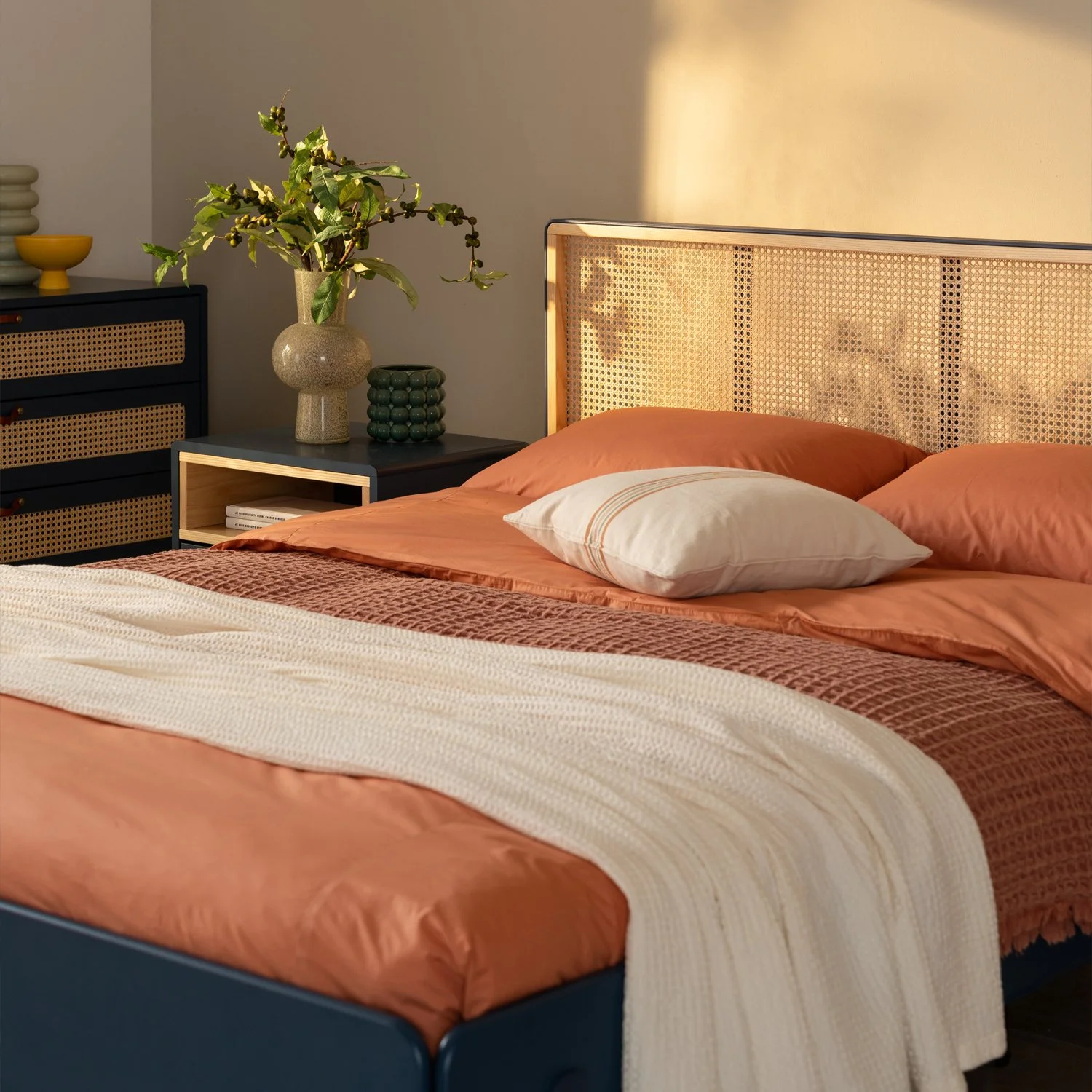
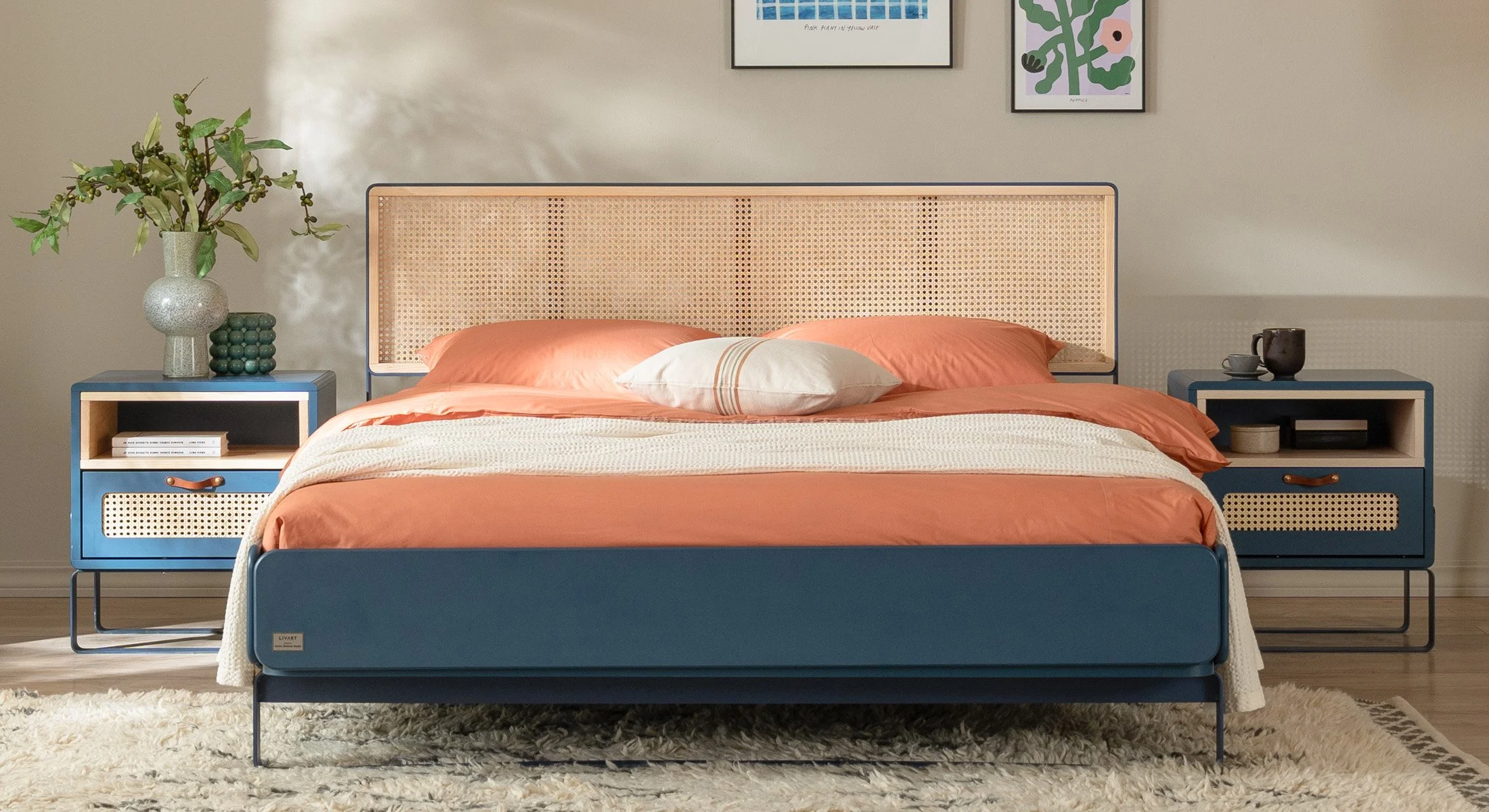
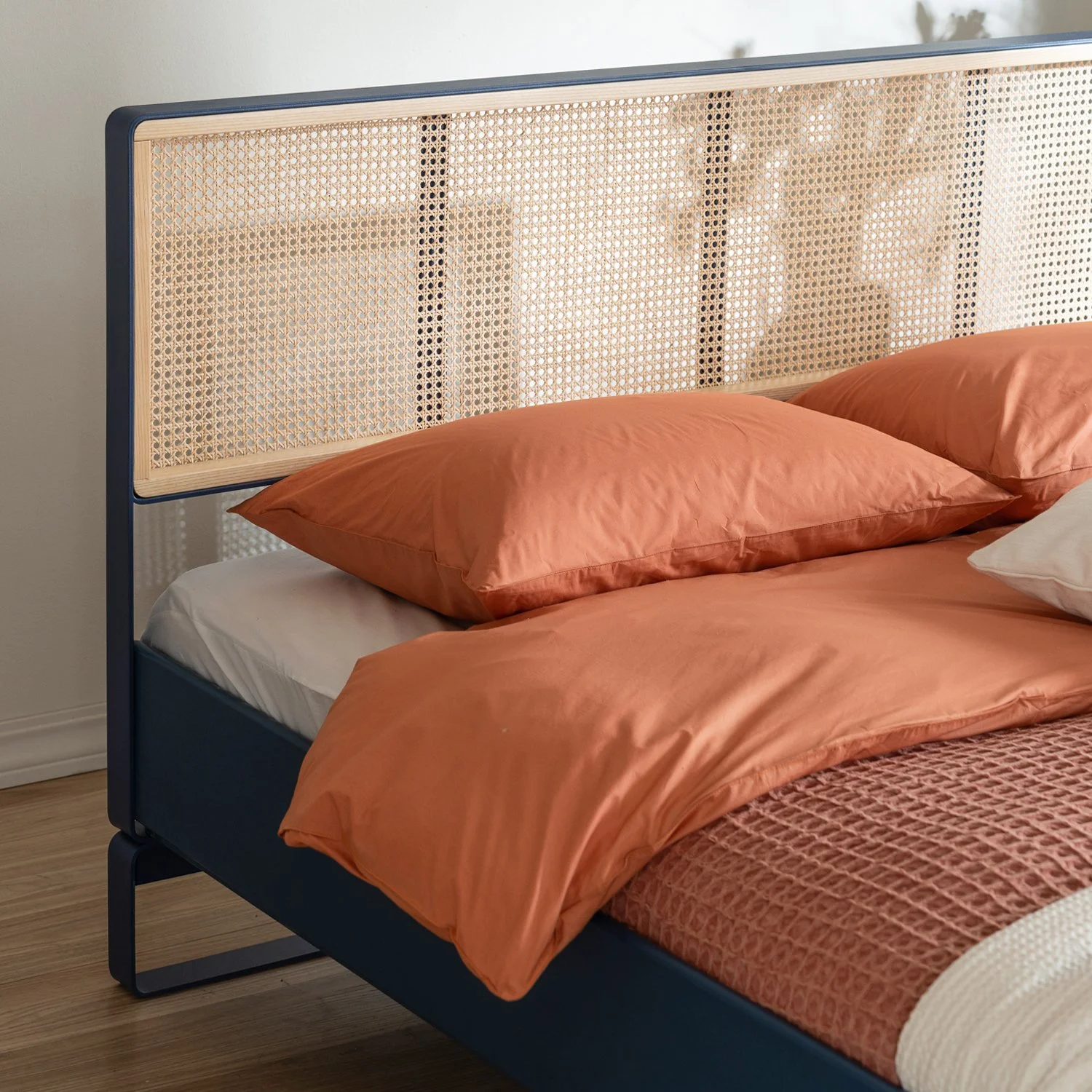
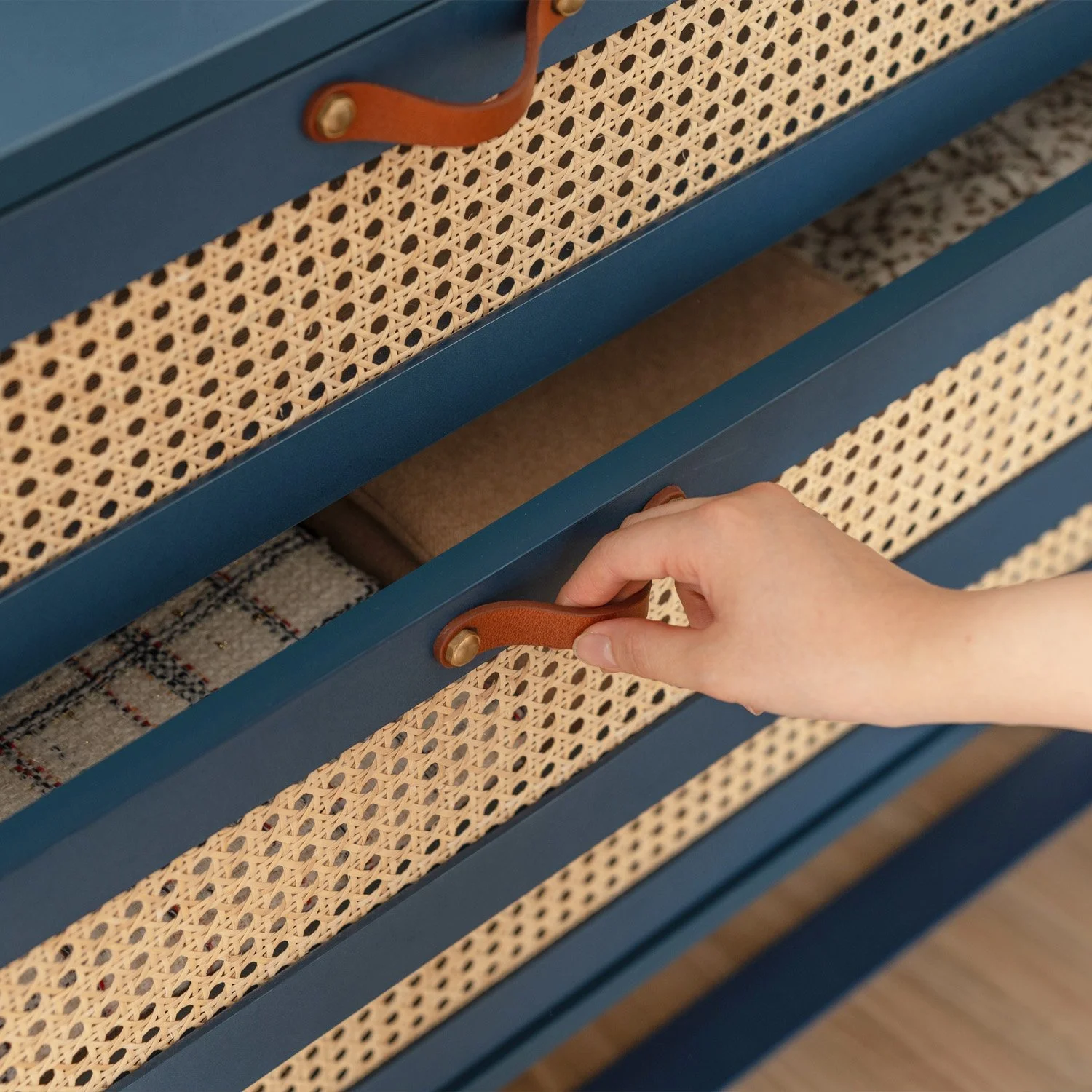
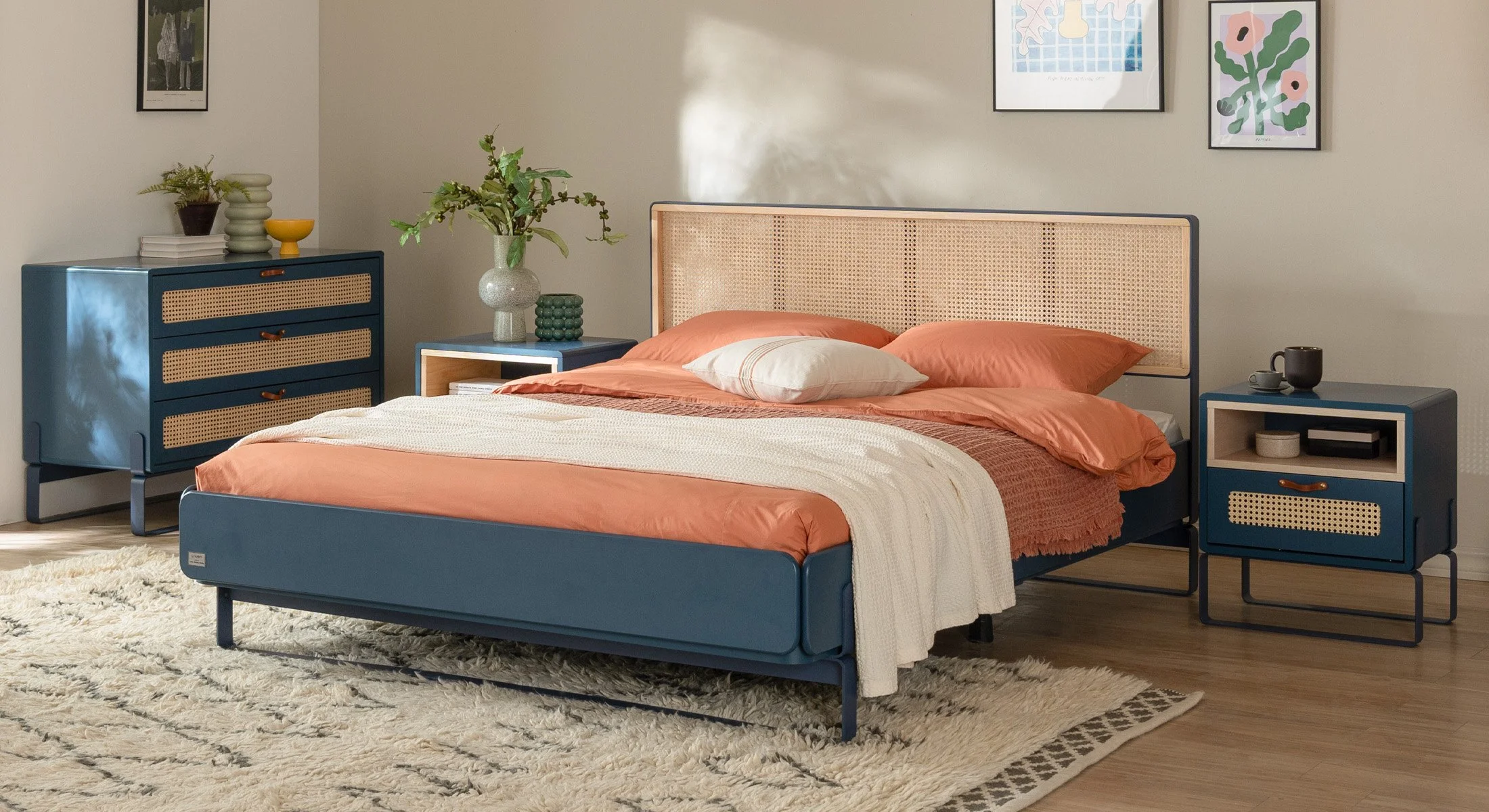
We developed the Minimal collection for the Korean firm Hyundai Livart, marking one of our most significant international collaborations. The project explores rattan as a primary material, seeking a harmonious balance with wood and lacquered elements. Inspired by the functionalist beauty of the Braun SK1 radio, we established a common visual language across the series.
Each piece is built upon a modular structure, allowing for material variations and different finishes without compromising the core industrial integrity of the design.
PROJECT DETAILS
Photography: Hyundai Livart
Work: Furniture design
A contemporary take on mid century classics
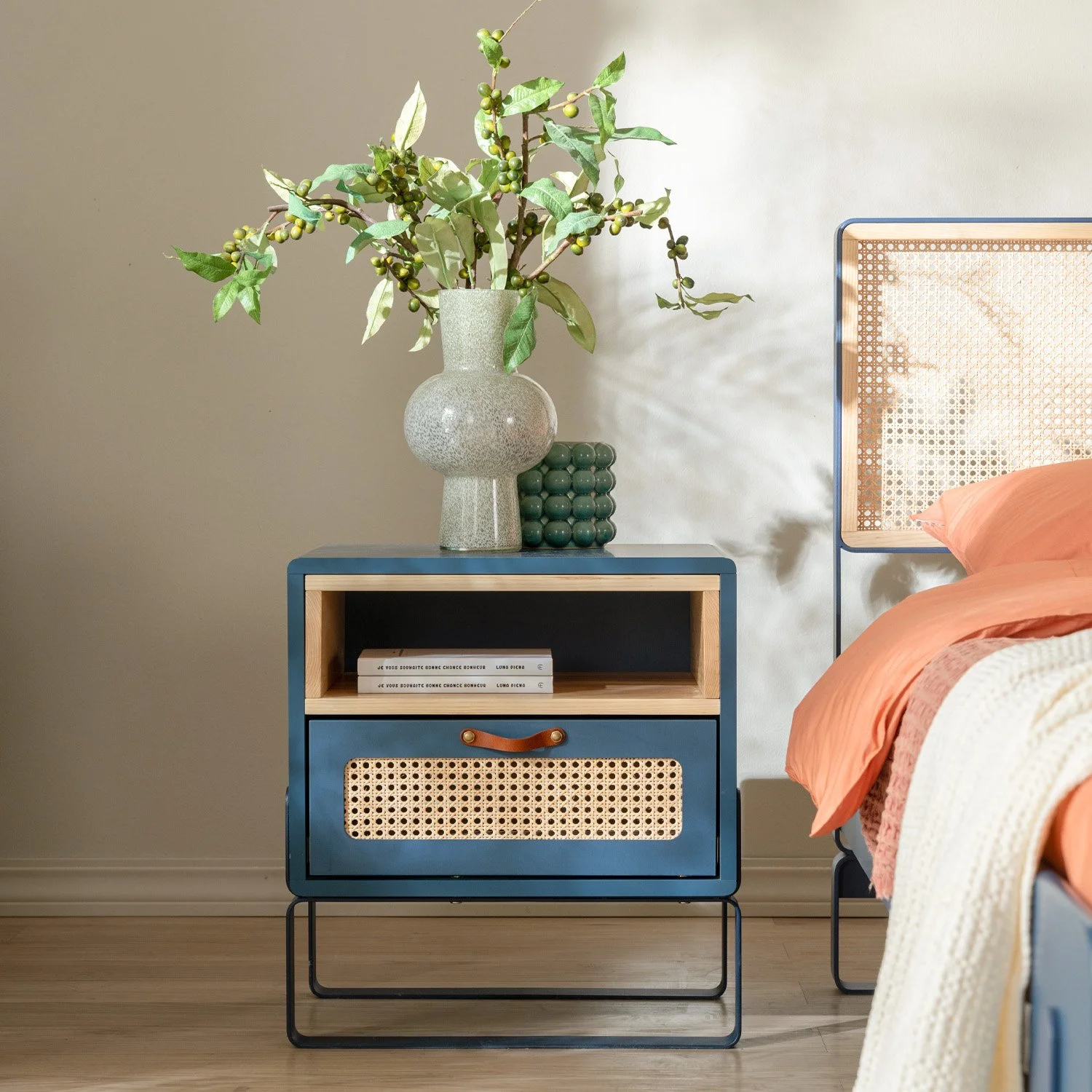
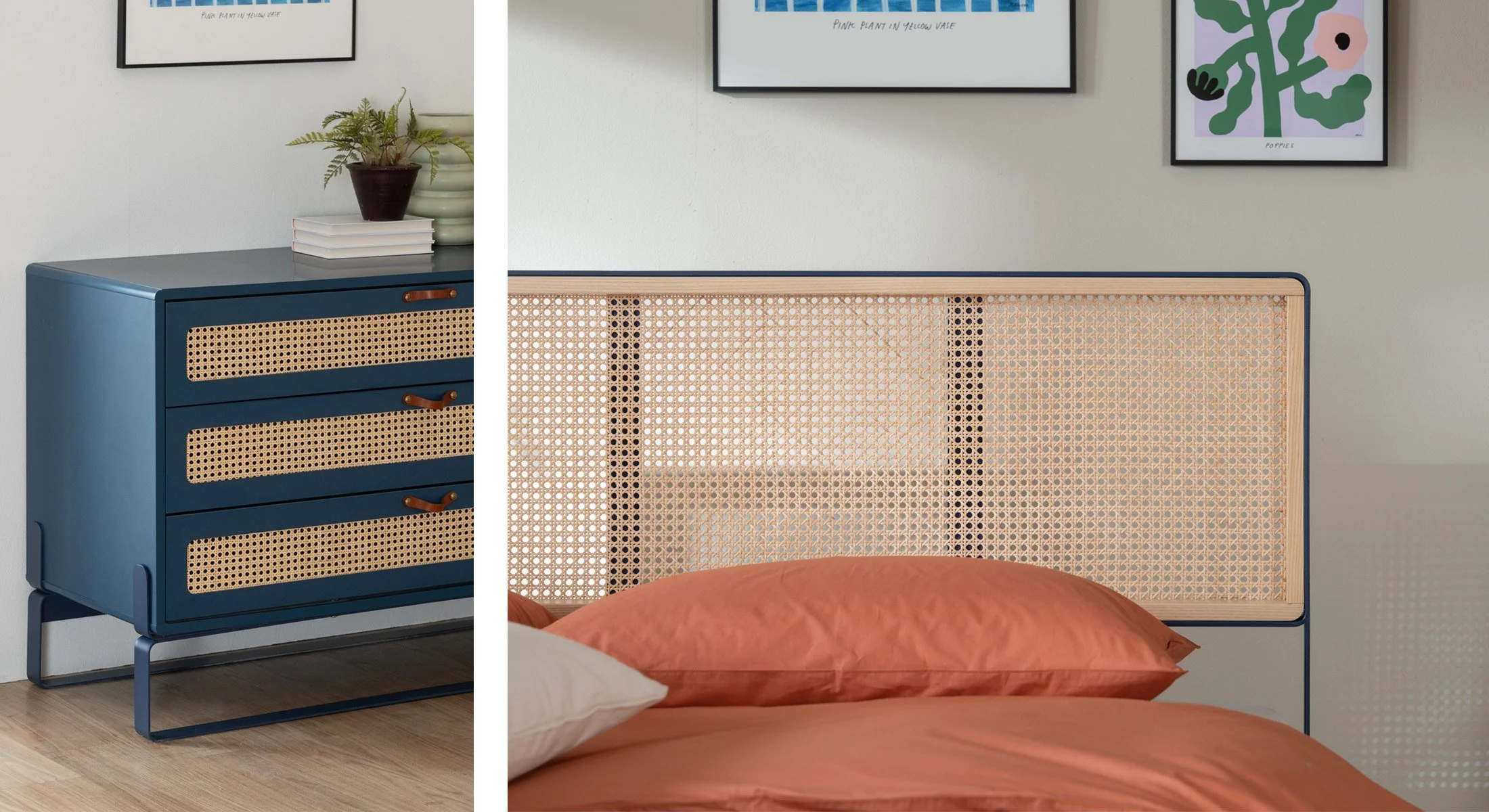
The design features rounded corners and handcrafted rattan panels that evoke the warmth of sixties and seventies furniture. However, by integrating metal components and precise lacquered surfaces, these pieces are transformed into new classics suitable for any modern environment. This fusion of nostalgic textures and contemporary manufacturing makes the collection both timeless and industrially versatile.
Functionalism and the iconic Braun SK1 radio
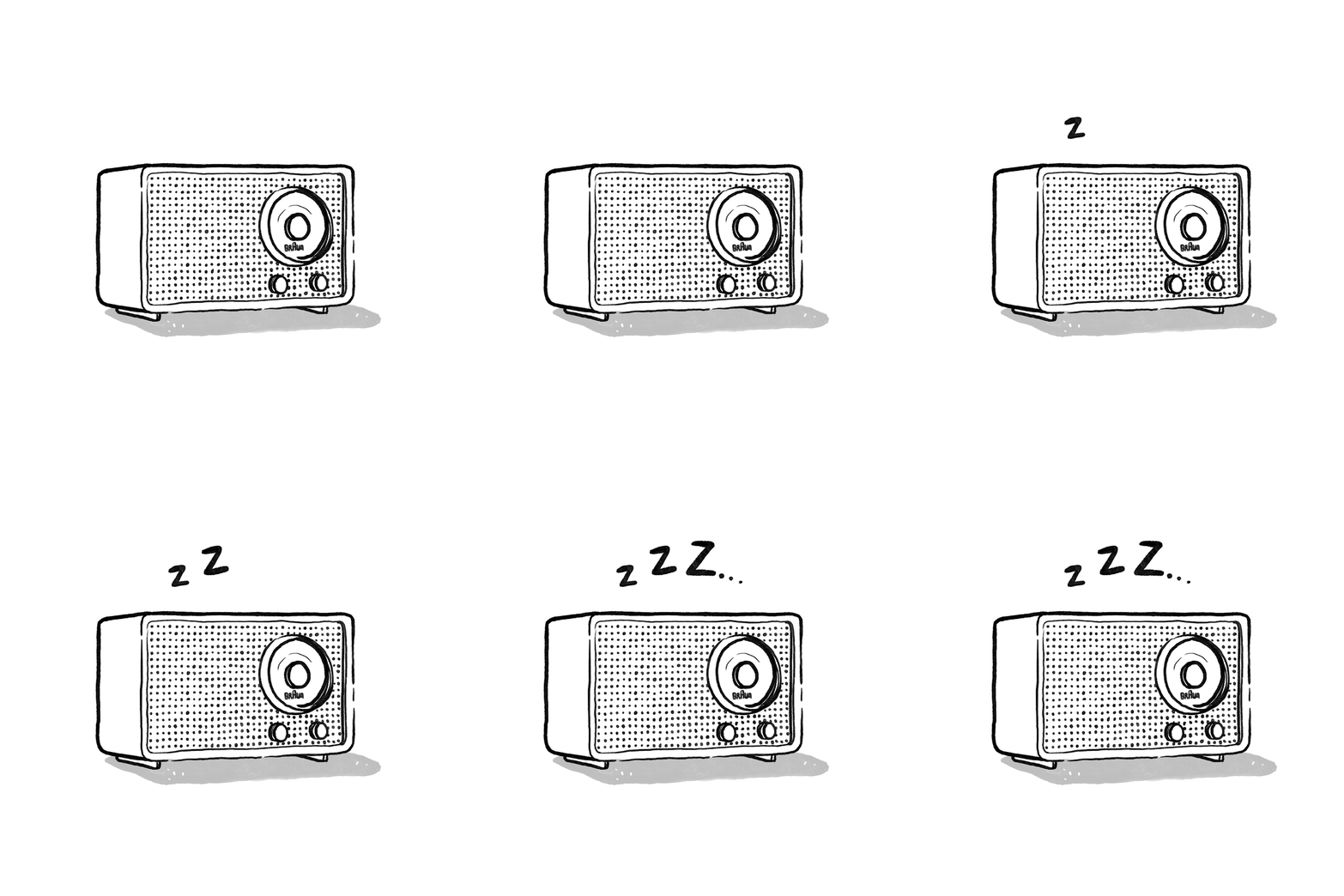
The conceptual spark for this collection came from a simple, poetic observation: the habit of listening to the radio before sleep. This led us to reference the iconic Braun SK1 radio designed by Fritz Eichler and Artur Braun. We translated the rhythmic proportions and the "friendly" geometry of the radio into furniture, resulting in a bed and storage system that feels as much like a piece of high end technology as it does a comfortable home object.
Precision prototyping and industrial development
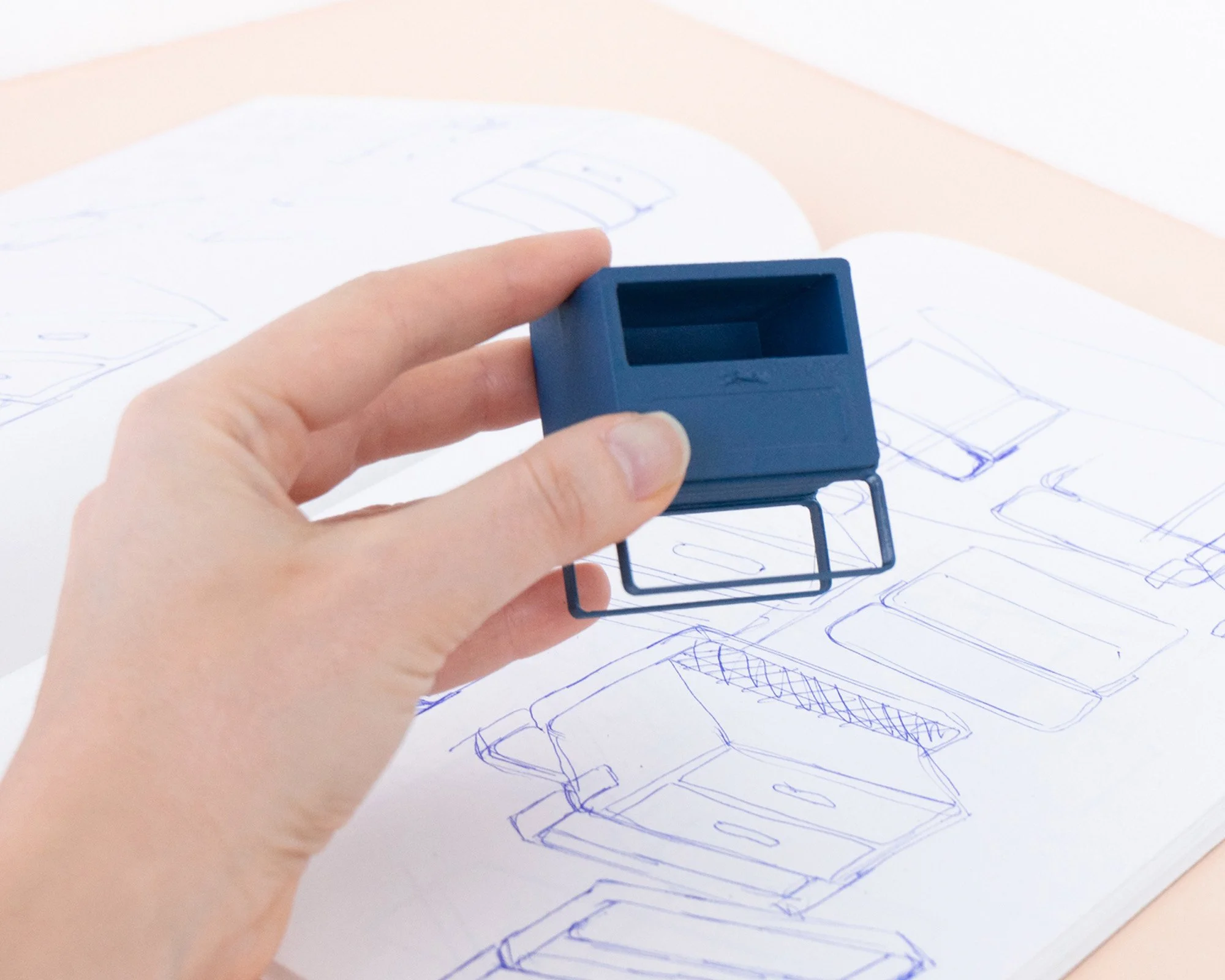
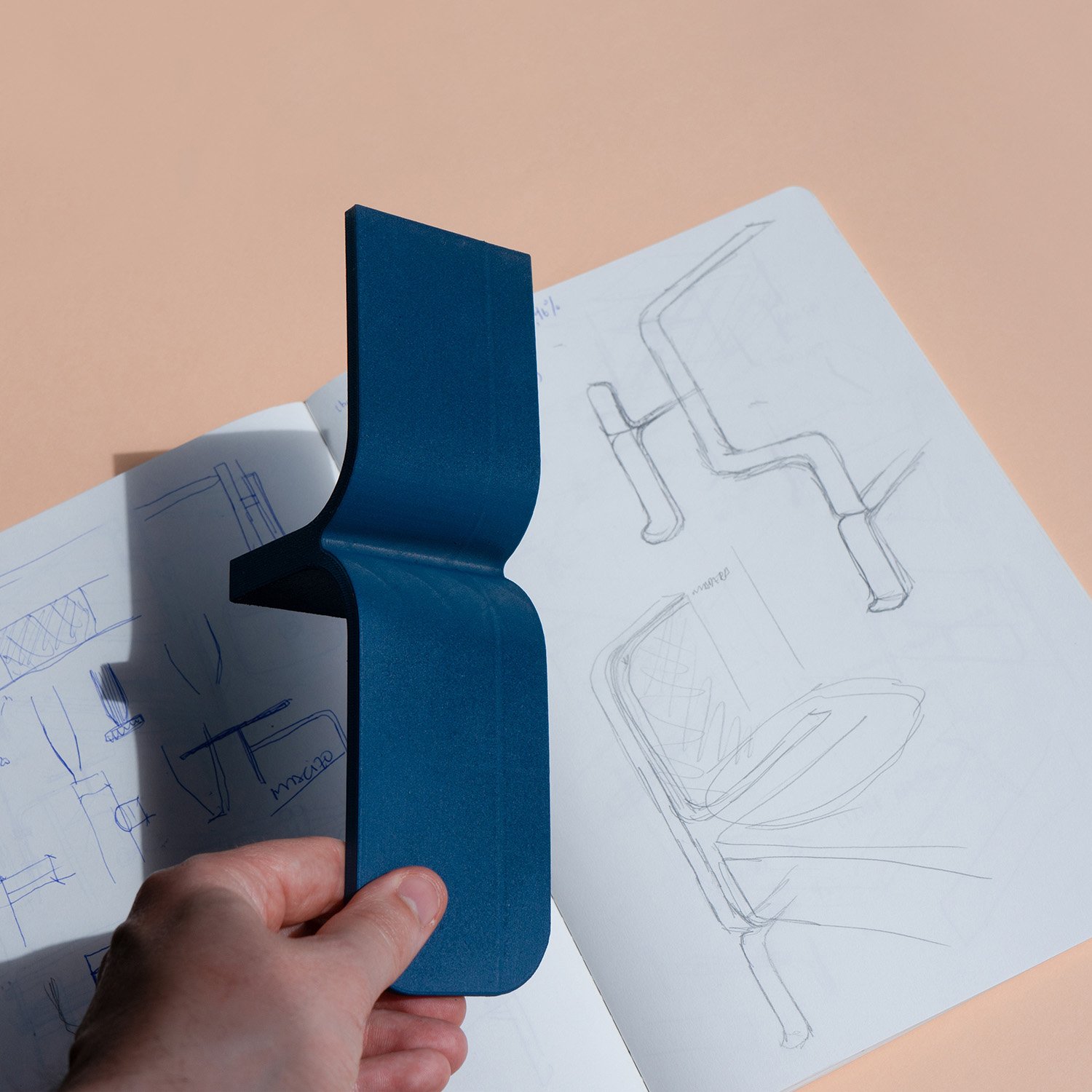
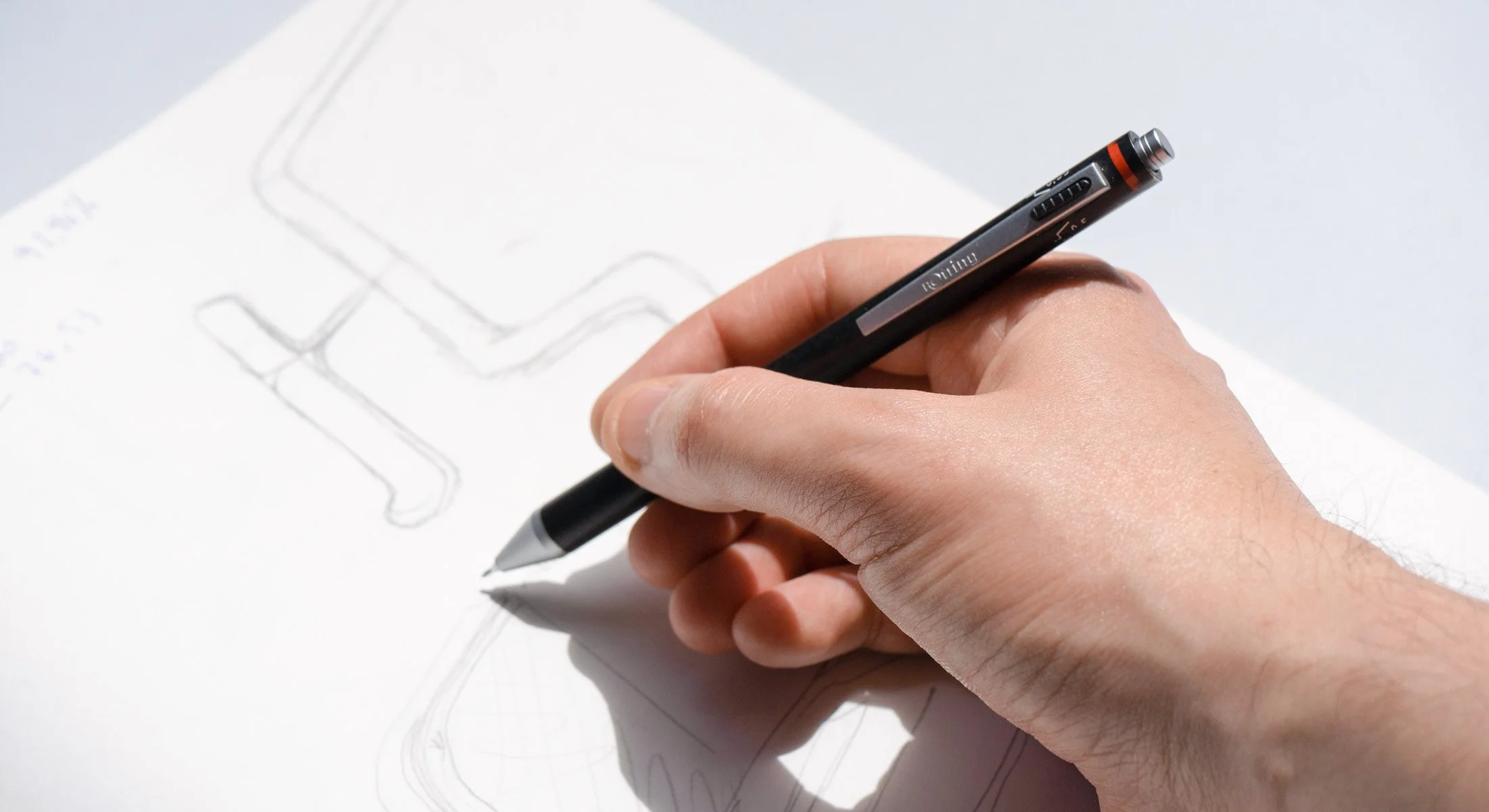
The development process for Hyundai Livart required rigorous technical testing. We progressed from initial sketching to the creation of three dimensional printed mockups at a reduced scale to evaluate proportions. This was followed by full scale mockups used to test ergonomics and structural stability before moving to the final prototypes. This methodical approach ensured that the modularity and aesthetic details remained consistent through the transition to mass production.